Demand-driven cleaning: pay for the cleaning you actually need
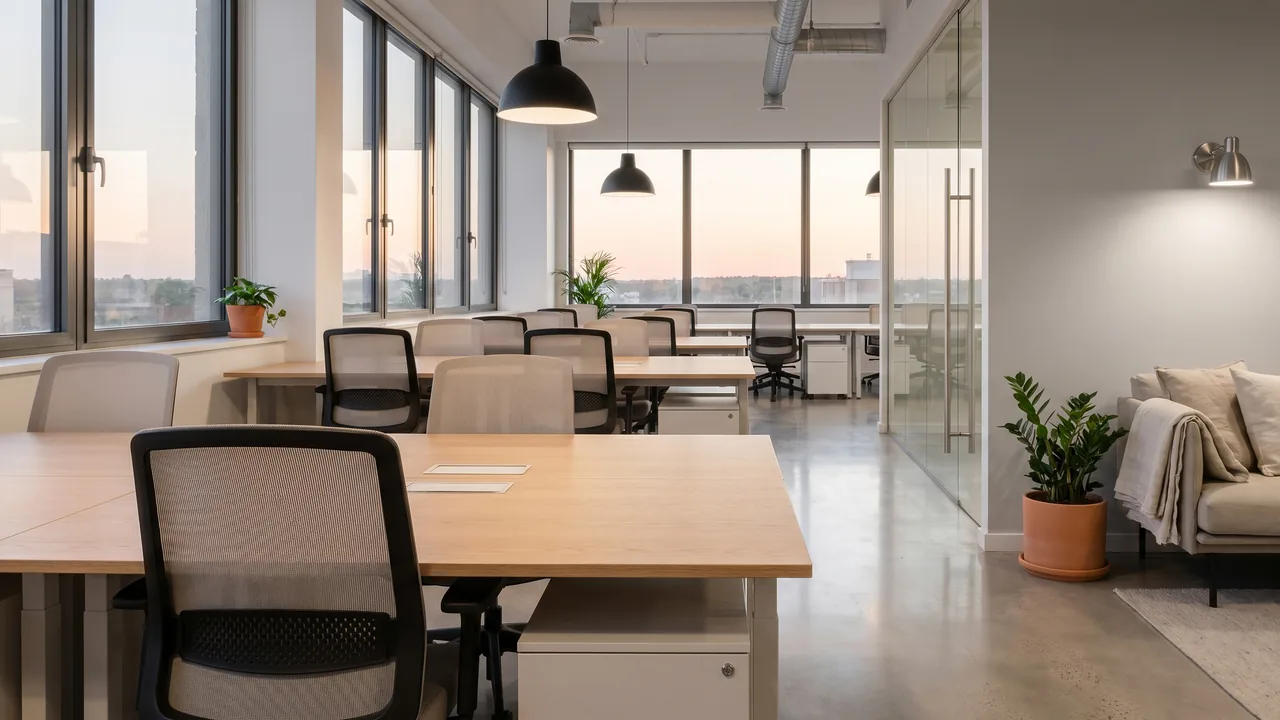
Demand-driven cleaning means you pay to clean an area when it is actually used or dirty, not because the schedule says every other Thursday. The frequency is driven by occupancy and condition rather than a fixed calendar. In an office where many work from home two or three days a week, half the layout often sits untouched while the cleaner cleans it as thoroughly as if everyone were there.
What is demand-driven cleaning?
Traditional cleaning is frequency-driven. The agreement specifies "daily vacuuming, weekly floor washing," and it is carried out regardless of whether the room has been used. It is easy to set up and predictable to invoice. The problem is that usage is rarely even. A meeting room might stand empty for an entire week, while the reception gets heavy foot traffic every day.
Demand-driven cleaning reverses this. We clean where it is needed, when it is needed, and document that the result meets an agreed level. Two things must be in place for this to work: a way to know what has actually been used, and a way to prove that what is clean is clean enough. The first we solve with zones and data. The second with a quality standard.
This is not the same as cleaning less. It is about shifting effort to where it adds value, and away from areas that have not been in use.
How do you divide the building into zones?
Zoning is the foundation. You cannot demand-steer an entire building as one unit, but you can divide it into areas with different logic.
A practical division for an office building:
| Zone | Examples | Control |
|---|---|---|
| Hygiene-critical | Toilets, canteen, cloakrooms, kitchen | Fixed frequency, daily – we take no chances here |
| High-traffic | Reception, main entrances, stairs, lift | Fixed or frequent frequency |
| Variable | Meeting rooms, quiet rooms, project rooms | Demand-driven – clean after use |
| Low-traffic | Archives, storage, seldom-used wings | Demand-driven – inspection before cleaning |
The point is that demand management does not apply to everything. A toilet must be cleaned every day regardless of what a sensor says, because the hygiene risk tolerates no uncertainty. The gain lies in the variable and low-traffic zones, and that is where you should start.
How does the cleaner know what has been used?
There are several levels here, from simple to advanced. You do not need the most expensive option to get started.
- Visual inspection. The cleaner evaluates the room on-site and skips what is obviously unused. Requires experienced people, but costs nothing in equipment.
- Usage indicators. A small sign or magnet that the user flips when the room has been used, or chairs put up on the table after cleaning. Low-threshold and surprisingly effective.
- Sensor data. Motion sensors or presence sensors that many buildings already have for lighting and ventilation. These tell you which rooms were actually in use and can feed a cleaning plan.
- Booking data. The meeting room system knows which rooms were reserved. That data already exists in the calendar.
Many businesses already have sensors for lighting and climate. The data foundation is already there; it is just a matter of connecting it to the cleaning. We often start simple, with inspection and usage indicators, and layer on data where the building already has it.
One thing to be honest about: sensors tell you about occupancy, not spills. A room could have been empty and still need cleaning because someone spilled coffee the day before. That is why professional judgement is never replaced—it just becomes better informed.
How do you know that what is clean is clean enough?
This is the objection many managers have right away: if the frequency varies, how do I check that quality does not drop? The answer is to measure the result instead of the effort.
NS-INSTA 800 is a Nordic standard for measuring and documenting cleaning quality. It evaluates how clean an area actually is, on a scale from 0 to 5, regardless of how often or with which method it was cleaned. This is precisely what demand-driven cleaning needs. When the agreement is tied to a quality level rather than a number of hours, the result becomes what counts.
Standard Norge describes NS-INSTA 800 Part 1 as the quality-control system and Part 2 as the certification requirements for organizations and people. In a demand-driven agreement, you must still agree on a quality level for each room type, such as level 4 in meeting rooms and level 3 in archives, and require the supplier to document that the level is maintained. If you want to know more about how the standard works in practice, we have written in more detail about what INSTA 800 is for office cleaning.
Then you have a contract where the frequency can flex, but the quality requirement remains fixed. That certainty is what makes demand-driven cleaning justifiable.
What is the benefit compared to a fixed frequency?
The honest benefit is that you stop paying for the cleaning of empty rooms. How much that amounts to depends entirely on your building.
An office with widespread working from home, where occupancy fluctuates from 40 to 90 percent throughout the week, has great potential. Many areas sit untouched much of the time. A building that is full and heavily used every day has little to gain, because most of it actually needs cleaning anyway. That is why we do not promise a fixed percentage figure. Anyone who does so without having seen your building is guessing.
Beyond cost, there are other benefits that are easier to stand by:
- Effort is moved to where it counts. Time saved on empty rooms can be spent on more thorough cleaning of heavily used zones.
- Fewer chemicals and water. Cleaning less frequently where it is not needed means using fewer products overall. This ties in with sustainable commercial cleaning, where reduced consumption is a goal in itself.
- Better data about your own building. Zoning and occupancy give you insights into how the spaces are actually used, which is useful far beyond cleaning.
For a broader overview of how to choose the right model and supplier, see our guide on choosing a cleaning supplier.
Is this right for my office?
Demand-driven cleaning works best when three things align: occupancy fluctuates, you have zones that tolerate a flexible frequency, and you are willing to measure quality instead of counting hours. An office with a flexible work-from-home policy fits all three.
It is poorly suited for buildings with fixed hygiene requirements in almost every room, such as healthcare facilities and production spaces with strict cleanliness requirements. There, a fixed frequency remains the right approach.
A natural combination is demand management alongside daytime cleaning. When the cleaner is present during the day, they can see which rooms are in use and adapt their efforts on the spot, without guessing based on a schedule drawn up the evening before.
Safety and products
Needs-based management changes when we clean, not how safely it is done. Two rules apply regardless of the model. Never mix cleaning agents with each other – use one product at a time according to the instructions on the label. And acid in the form of vinegar, citric acid, or descaler must never be used on natural stone, marble, granite, or slate, because it etches the surface and leaves dull spots. Always test a new product on a hidden area first.
How to get started
The safest approach is to run a pilot, not to overhaul the entire building all at once.
- Map out the occupancy. Is there sensor data, booking figures, or just a gut feeling about which areas are left empty?
- Divide the building into zones according to the table above, and mark which areas must keep a fixed frequency.
- Agree on an INSTA 800 level per room type, so the quality requirement is defined before flexing the frequency.
- Run a pilot on one floor or one zone for two to three months. Measure quality and cost against your current contract.
- Scale what works, and keep a fixed frequency where the pilot shows that needs-based management is not worthwhile.
We at Vaskeladden are happy to take a proactive approach with these types of models, but we always start by looking at your building before we promise anything. If you want to know what an office assignment costs to begin with, you will find the pricing details in the guide on office cleaning prices. A needs-based plan builds on that, using zones and a pilot as the basis for the figures.