Undeclared vs. declared cleaning: what are you actually risking as a buyer?
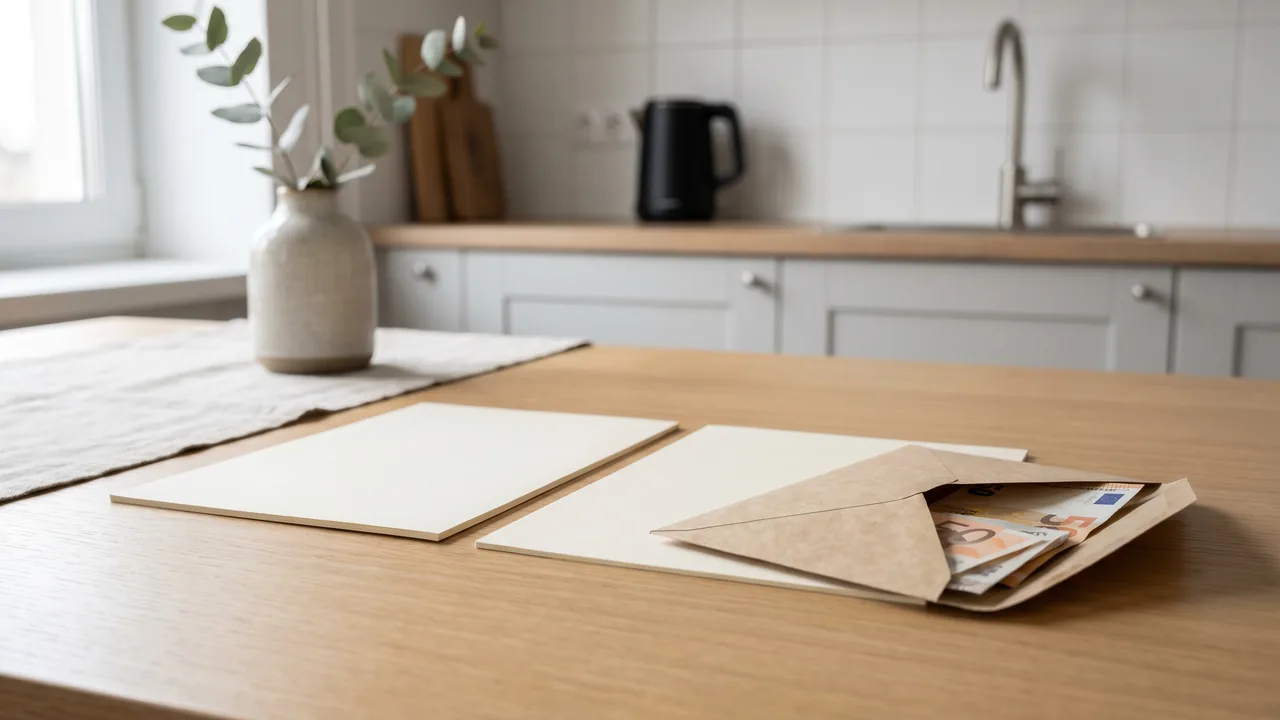
If you buy cleaning services from a company without legal status in the Norwegian Labour Inspection Authority's Renholdsregisteret, you are violating the purchasing prohibition yourself. An informal payment without an agreement, invoice, or receipt also leaves you with weak documentation if the work is poor or something gets damaged.
Most people think of undeclared work as the seller's problem. When it comes to cleaning, that is not the case. The legislator has placed an independent responsibility on you as the buyer, and this applies whether you are a business or a private individual. Here we go through what you actually risk, and how an approved company protects you.
What does undeclared and declared cleaning mean?
Declared cleaning means that the business has legal status, reports and pays what it should, and provides you with an invoice. Undeclared cleaning is work or payment that is kept outside mandatory reporting. Cash payment is not in itself proof of undeclared work, but you should always demand a receipt and verify who you are paying.
The distinction is not always as clear as you might think. A company can look orderly on its website, yet still lack approval in Renholdsregisteret. A private individual might take on a job now and then without being aware of the reporting rules. Therefore, it pays to know exactly what the law requires.
Is it illegal for you as a private individual to buy undeclared cleaning?
Yes. This surprises many. Private individuals are also prohibited from purchasing cleaning services from a business that is not listed in the Norwegian Labour Inspection Authority's Renholdsregisteret, or that has the status "ikke godkjent".
Previously, the purchasing prohibition applied only to commercial entities. Now you, as a household, are covered on equal terms. If you buy cleaning from a company that is not listed in the register, you are breaking the law yourself—no matter how nice the company is or how good the job is.
The good news is that it takes less than a minute to check. Renholdsregisteret is public and free of charge. "Godkjent", "Søknad under behandling", and "HMS-kortbestilling under behandling" are legal statuses. The Norwegian Labour Inspection Authority's register guide confirms this, checked August 24, 2026. We have written a separate guide on how to perform the check in legal cleaning help and Renholdsregisteret.
A company with legal status has an active registration you can verify. Employees must have HMS cards, but the status "HMS-kortbestilling under behandling" means the card order is not yet complete. If the company is listed as "ikke godkjent", or is missing from the register, you should find another one.
What is the difference between Renholdsregisteret and the 6,000 NOK threshold?
Many people confuse two entirely different set of rules here, creating confusion. Let's make a clear distinction between them.
| Situation | Applicable rules | What is required of you |
|---|---|---|
| You buy cleaning from a company | Renholdsregisteret | Check that the company has legal status before ordering. |
| You employ a private individual directly to work in your home | A-melding / payroll reporting | If you pay more than 6,000 NOK in a year, you must report wages and deduct tax. |
Renholdsregisteret concerns who you buy from. If you buy from a company, the company must have a legal status. It has nothing to do with the amount.
The 6,000 NOK threshold is about something entirely different: paying a private individual yourself for work in the home. If you pay more than 6,000 NOK to the same person over the course of a year, the salary must be reported and tax deductions calculated. For total wages up to 60,000 NOK, you can use the simplified a-melding; above 60,000 NOK, you must also calculate employer's national insurance contributions. The Norwegian Tax Administration's guidance on wages for work in the home explains the thresholds, checked August 24, 2026.
The important point: The 6,000 NOK threshold is not a tax deduction. Norway does not have a general or dedicated RUT-like deduction for ordinary private cleaning. A narrow transitional rule for illness costs may apply to necessary home help in certain older cases; ask the Norwegian Tax Administration before claiming a deduction. Claims that an ordinary cleaning purchase automatically saves tax are incorrect.
What do you risk if something gets damaged?
Renholdsregisteret documents that an approved business has occupational injury insurance or an equivalent scheme for employees. It does not automatically document third-party liability insurance for damage to the customer's home or belongings. Therefore, ask the provider about such coverage and request written confirmation before the work starts.
Without an agreement, invoice, or receipt, it becomes harder to document who performed the work, what was agreed upon, and how the damage occurred. Whether your own insurance covers a specific damage depends on the terms; ask your insurance company rather than assuming.
If you employ a private individual directly, you may incur employer obligations. The Norwegian Tax Administration's guidance above shows how wages and employer's contributions should be handled. If you purchase from an independent business, you are not the employer. If the business has employees, it is the employer and must have an occupational injury scheme for them.
Why is undeclared cleaning so much cheaper?
A very low quote may be due to employer's contributions, holiday pay, tax, or statutory wages not being included. The price alone does not prove an illegality, so use it as a signal to check register status, HMS cards, and invoices.
Cleaning has a universally applicable minimum wage for employees in private cleaning companies. The Norwegian Labour Inspection Authority's current rates, checked August 25, 2026, specify 236.54 NOK per hour for workers over 18 years old and 185.55 NOK for workers under 18 from June 15, 2025, with a night supplement of at least 29 NOK/hour.
When the work is performed by an employee, the employer also incurs costs for employer's contributions, holiday pay, equipment, and operations, among other things. Ask for an explanation if a quote is unusually low, and compare written quotes covering the same scope. The price alone does not show what someone receives in pay or whether the work is legal.
How does an approved company protect you?
In short: it moves the risk away from you. Here is what you actually get in return for choosing declared service.
- You stay on the right side of the law. An approved company in Renholdsregisteret means your purchase is legal.
- You can clarify damage claims in advance. Request documentation of third-party liability insurance and the terms that apply to your belongings.
- You can document your claim. An agreement and invoice make it easier to show what the company promised and what you paid for.
- Employees have statutory protections. Approval includes occupational injury schemes and the requirements that apply in the universally applicable cleaning sector.
- You avoid employer responsibility. You are buying a service from an independent business; you are not an employer. No a-melding, no tax deduction, no payroll administration on your plate.
The checklist before ordering is simple:
- Look up the company in Renholdsregisteret, and confirm that the status is legal.
- Request that everyone performing cleaning has a valid HMS card.
- Demand an invoice, never pure cash without a receipt.
- Be skeptical of an hourly rate that is far below market level.
- Ask about third-party liability insurance before the job starts.
What do I do if I have already bought undeclared cleaning?
Switch to a company with legal status for future assignments. If you have personally paid an individual more than 6,000 NOK in a year without reporting it, read the Norwegian Tax Administration's guidance and contact the Tax Administration if you are unsure how to correct past payments.
The point of choosing legitimate services is not to be nice to the state. It is to avoid being left with the bill—legally, financially, and practically—the day something goes wrong. The small saving on the hourly rate is rarely worth it.
If you want to check that the next company has legal status in Renholdsregisteret, start with the guide on legal cleaning services and Renholdsregisteret.
Home safety: never mix chemicals
One final warning, regardless of who does the cleaning. Never mix bleach with anything other than water. Bleach and vinegar produce chlorine gas; bleach and ammonia or salmiak produce harmful chloramine. Both can make you severely ill in seconds in an enclosed bathroom. A reliable company knows these rules. If you clean yourself, they apply just the same.