Deep cleaning vs. regular cleaning: difference, price, and when you need what
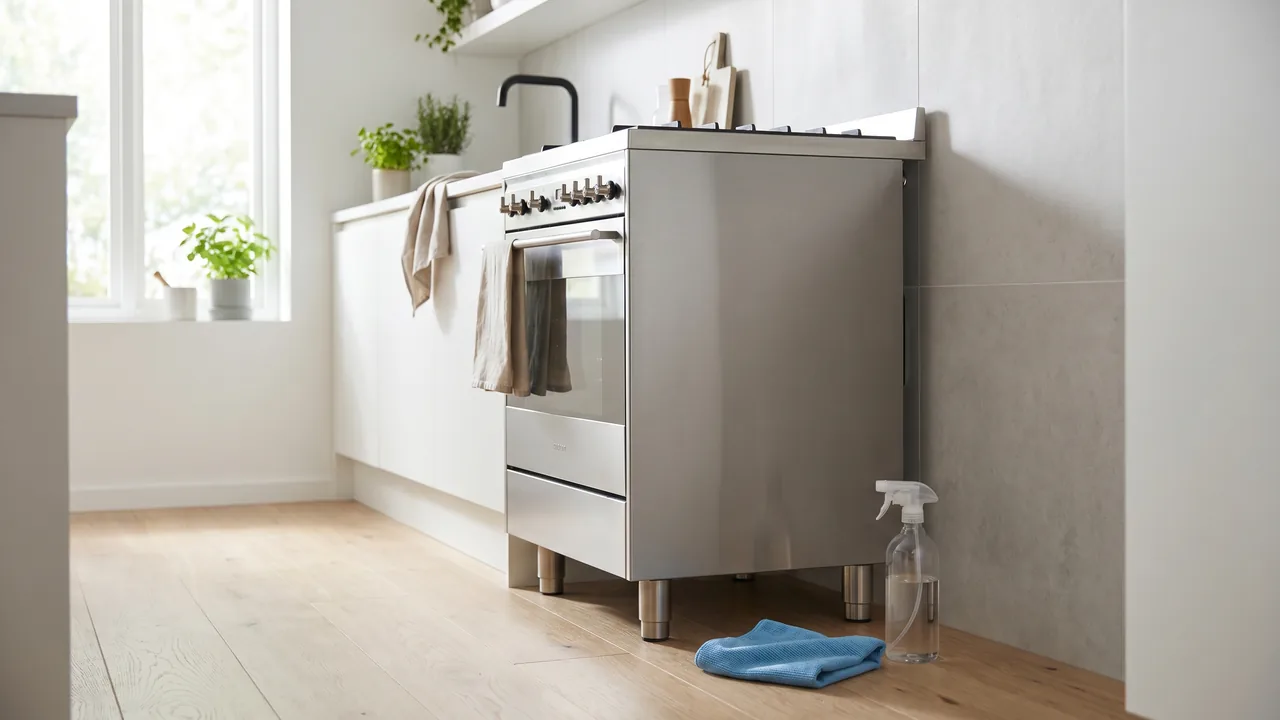
Regular cleaning keeps everyday life clean – dust, floors, bathrooms, and kitchens, everything you see and touch. A deep clean tackles what regular cleaning never reaches: behind the stove, inside the oven, limescale in the shower, baseboards, frames, and the tops of cabinets. A deep clean often takes three to five times as long as a regular clean of the same home, and costs accordingly. Here is the difference, the prices as of 2026, and when you actually need what.
What does a regular clean cover?
Regular cleaning is maintenance. It is the rounds you do every week or every other week to keep the home fresh, and what cleaners call regular cleaning when you have an agreement.
What is actually included depends on the service you book. The list here is a typical starting point, not a definitive answer. Certain tasks – such as cleaning the oven, windows, balcony, or appliances – may be add-ons that you must order separately, and are not automatically included in all assignments. What applies to your assignment is stated in the quote and order confirmation. If you are in doubt about whether something is included, ask us before cleaning day.
A typical regular clean includes:
- Dusting accessible surfaces you can reach without moving heavy objects
- Mopping floors and vacuuming
- Bathroom: wiping down washbasin, toilet, shower, and mirror
- Kitchen: countertops, stovetop, and the outside of cabinets and appliances
- Emptying trash
The point of a regular clean is to maintain the standard, not to reset everything. If you want to know how often you should clean the various rooms, we have a separate guide on how often you should clean your home.
What does a deep clean cover?
A deep clean covers what regular cleaning skips because it requires time, moving things, and effort. You pull out the stove, tackle the limescale, and clean places no one looks at daily.
A deep clean typically includes:
- Behind and under the stove, refrigerator, and other movable furniture
- Inside the oven and extractor fan, with proper degreasing
- Limescale in the shower, on fixtures, and tiles – see our dedicated guide on how to remove limescale in the bathroom and shower
- Baseboards, door frames, window sills, and top edges of doors
- Inside cabinets and drawers
- Tops of tall cabinets, light fixtures, and vents
- Window cleaning, often both inside and outside
Think of it this way: regular cleaning keeps the home at a certain level; a deep clean lifts it back up to where surface cleaning cannot reach. Limescale, grease, and dust on top of cabinets build up regardless of how diligent you are weekly. That is why most people need a deep clean once in a while.
When do you need a deep clean?
You need a deep clean when buildup has gone too far for regular cleaning, or when an occasion demands that the home is thoroughly clean at its core. Common situations:
- Spring and autumn cleaning, what we traditionally call a deep clean
- Before or after a major event – confirmation, Christmas, long-term guests
- When you take over a pre-owned home and want to start from scratch
- After renovations, once construction dust has settled everywhere
- If you have let regular cleaning slip for a bit too long and the bathroom or kitchen has developed buildup
A simple sign: if you dread pulling out the stove, it is probably time.
Move-out cleaning, deep clean, or seasonal deep clean – what is what?
The three terms are often confused, but they have different goals. Here is the summary of the differences:
| Type | When | Goal | Who determines the scope |
|---|---|---|---|
| Regular cleaning | Every week / every second week | Maintain the standard | You, as needed |
| Deep clean | A couple of times a year | Reset what regular cleaning does not reach | You, free choice of rooms and depth |
| Deep clean (seasonal) | Spring and autumn | Traditional seasonal cleaning of the entire home | You, but typically the whole home together |
| Move-out cleaning | When moving in or out | Hand over the home empty and ready for the next person | Standard expected by many real estate agents and landlords |
Seasonal deep cleans are essentially deep cleans tied to a specific time of year. Move-out cleaning is the one that stands out the most: it is done in an empty home, according to a known standard, and the goal is for the next resident or landlord to approve it. If you are moving, you should read about what move-out cleaning costs before ordering, and use a move-out cleaning checklist so nothing gets missed.
What does a deep clean cost in 2026?
The prices here are market estimates for 2026, not a quote from Vaskeladden. The cost depends on size, condition, and access. If you buy the service, ask the provider for a written quote that states the price and scope.
As a market estimate for 2026, a deep clean often costs NOK 2,500–6,000 for a standard apartment, and higher for larger homes or when limescale and grease have been left to build up for a long time. A regular clean of the same home costs a fraction of that, because it takes a fraction of the time.
The difference is about hours, not magic. A rough overview:
| Home | Regular cleaning | Deep clean |
|---|---|---|
| Small apartment (under 50 m²) | NOK 700–1,200 | NOK 2,000–3,500 |
| Apartment 50–90 m² | NOK 1,000–1,800 | NOK 3,000–5,000 |
| House / larger home | from NOK 1,800 | from NOK 5,000 |
The ranges are estimates, not a quote. They depend on condition, the number of bathrooms, and how much needs to be moved.
Why you should be skeptical of the lowest prices
Here comes the honest part. For employees in private cleaning companies, the wage floor is universally applicable: minimum wage is NOK 236.54/hour for workers over 18 from June 15, 2025, and NOK 185.55/hour for workers under 18. For an employee, employer's national insurance contributions, holiday pay, insurance, and equipment are added on top for the employer.
An unusually low quote is reason to question the scope, registration, and working conditions. The price alone does not reveal what someone is paid or whether the work is legal. Therefore, check that the business has legal status in Renholdsregisteret, and ask for a written quote detailing what is included.
It is also illegal for private individuals, not just businesses, to purchase cleaning from a company that lacks legal status in the Norwegian Labour Inspection Authority's Renholdsregisteret. This has been a punishable offense since July 1, 2018. Before ordering, check that the status is "Godkjent", "Søknad under behandling", or "HMS-kortbestilling under behandling" – we have written a dedicated guide on legal cleaning help and Renholdsregisteret.
Norway does not have a general or dedicated tax deduction for ordinary private cleaning. A narrow transitional rule for illness costs may apply in older cases; ask the Norwegian Tax Administration (Skatteetaten) if this might be relevant to you.
How often should you deep clean?
For most homes, one or two deep cleans a year—often in spring and autumn—is enough, provided you have regular cleaning in between. Regular cleaning then serves as maintenance, while the deep clean acts as a reset.
You should do it more often if you have:
- Pets that shed and wear down floors and textiles
- Household members with allergies, where dust and mites must be kept to a minimum
- High foot traffic in and out, or small children
If you live alone and are thorough with your weekly routine, one comprehensive round a year might be sufficient.
Can I do the deep clean myself?
Yes, much of it. But two things are worth pointing out clearly.
First: be careful with chemicals. Never mix bleach with anything other than water. Bleach and vinegar create chlorine gas, and bleach and ammonia create chloramine—both are dangerous to inhale. Use one product at a time in a well-ventilated room.
Second: acid corrodes natural stone. Vinegar, citric acid, and many limescale removers etch marble, granite, and slate, leaving dull spots. If you need to remove limescale from a surface you are unsure about, keep acid away from natural stone and marble, and always test on a hidden spot first.
If you want to do it yourself but struggle with streaks on the glass, we have a guide to streak-free windows. If you are considering hiring someone instead, it may be worth reading how to choose a cleaning provider you can trust.
In short: regular cleaning keeps everyday life under control, while deep cleaning catches what regular cleaning misses. Most homes need both. Knowing the difference helps you decide when to pay for the bigger job—and when the weekly routine is enough.