How to remove limescale in the bathroom – without damaging the tiles
If you want to remove limescale in the bathroom without damaging anything, you need to identify the surface first. Acid can be used on materials described by the manufacturer as acid-resistant, but marble, limestone, and travertine can etch and develop permanent dull marks. Granite, slate, grout lines, and specially treated taps also require you to follow the manufacturer's advice. If you are unsure, use a pH-neutral cleaner designed for the material.
Vinegar dissolves limescale, but "natural" does not mean harmless to the surface. Byggkeramikkforeningen specifically warns against using acid on calcareous stone types, and the Natural Stone Institute recommends pH-neutral cleaning products on natural stone.
What causes limescale in the bathroom?
Limescale consists of minerals left behind when water evaporates. Tap water contains calcium and magnesium, and when a water droplet dries on shower glass, the water evaporates while the minerals remain as a white, rough deposit. Repeat that a few hundred times, and you get the dull film we recognise on shower walls, taps, and mixers.
How quickly it builds up depends on the hardness of the water where you live. Hardness measures the amount of dissolved calcium and magnesium; Tysvær municipality explains the units of measurement and why hard water causes more limescale build-up. Surfaces that get wet daily and are not wiped down collect the most limescale. That is why the shower is the worst culprit.
Which acids are safe against limescale?
Limescale is dissolved by acid, but the correct strength and contact time depend on the product and the surface. Two common options at home are:
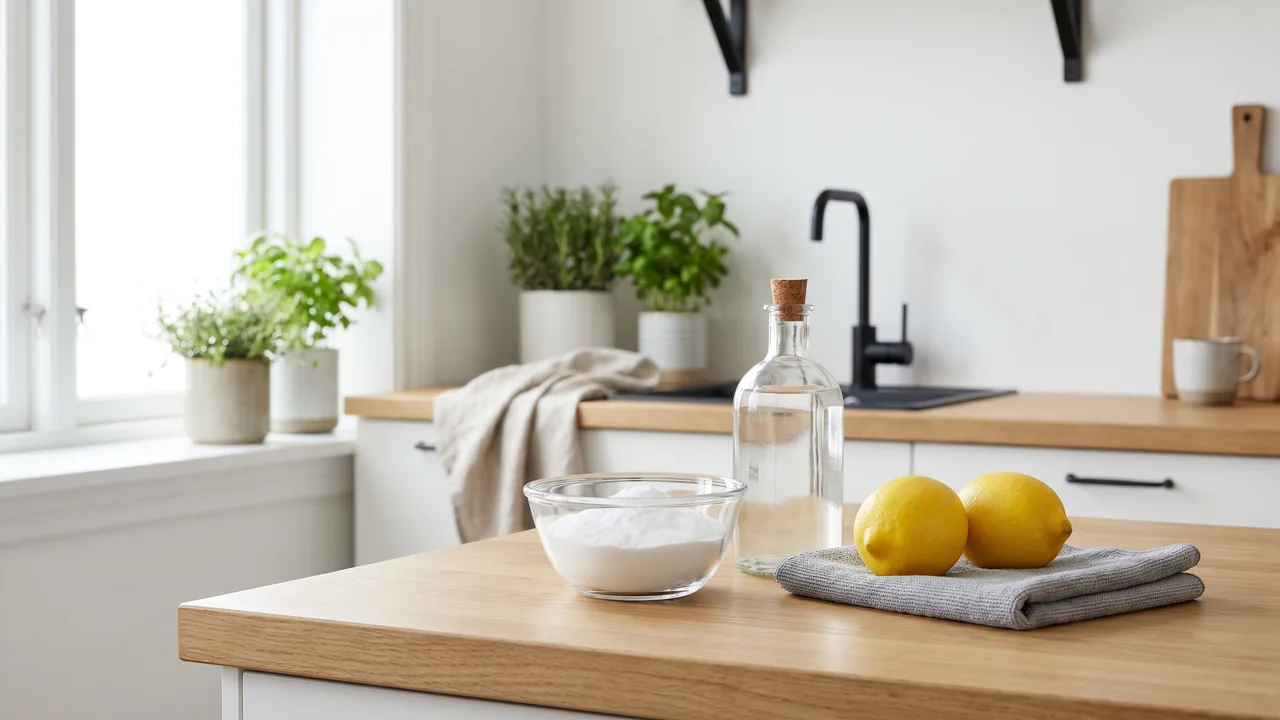
- Citric acid in a ready-made product or mixed according to the package instructions. It has little odour and can be used on documented acid-resistant surfaces.
- Vinegar can dissolve light limescale on certain ceramic tiles and glass, but should not be used regularly on cementitious grout or without the manufacturer's permission.
Choose one product, read the label, and test it in a hidden spot. Do not assume that chrome-plated, brushed, or coloured metal can withstand the same treatment; the surface finish determines what it tolerates.
If you want to avoid mixing solutions yourself, ready-to-use limescale removers in spray bottles are available. They are often slightly stronger, and many are suitable for the bathroom. Read the label: if it states that the product should not be used on natural stone or marble, take that seriously.
Which surfaces must you NEVER use acid on?
This is the one thing you must remember. Acid — whether it is vinegar, citric acid, or a store-bought limescale remover — damages a range of common bathroom materials:
| Surface | What the acid does | Use instead |
|---|---|---|
| Marble, limestone, and travertine | Calcareous stone reacts with acid and can get dull etch marks | pH-neutral stone cleaner and a soft cloth |
| Granite, slate, and other natural stone | Tolerance varies with minerals and surface treatment; acid is discouraged without approval | pH-neutral stone cleaner, follow supplier advice |
| Untreated or oiled wood | Can dry out, dull, and discolour | Damp cloth, or mild soap intended for wood |
| Certain enamelled surfaces | Dull spots and wear over time on older or damaged enamel | Test first; use mild soap on uncertain surfaces |
If you are unsure whether a tile is natural stone or ceramic, the simplest test is to look at the back of a loose tile or ask the person who tiled the bathroom. When in doubt: treat it as natural stone and keep acid away. Always test a small, hidden spot first, and wait a few minutes to check for changes.
A specific point about grout lines: Mapei notes that repeated use of vinegar can discolour and weaken cement-based grout lines. Use a suitable cleaner, keep contact time as short as possible, and rinse thoroughly.
Safety: never mix chemicals
This is a health hazard. Giftinformasjonen (the Norwegian Poison Information Centre) states that chlorine-based cleaning products can form chlorine gas when mixed with acid. Never mix bleach with anything other than water:
- Bleach + vinegar (or another acid) creates toxic chlorine gas.
- Bleach + ammonia or household ammonia creates chloramine, which is also toxic.
If you use an acid to tackle limescale, do not use bleach, chlorine cleaner, or another product on the same surface at the same time. Rinse away one product before potentially using another. Ventilate the bathroom while working, and wear gloves if you have sensitive skin.
How to remove limescale in the shower enclosure step by step
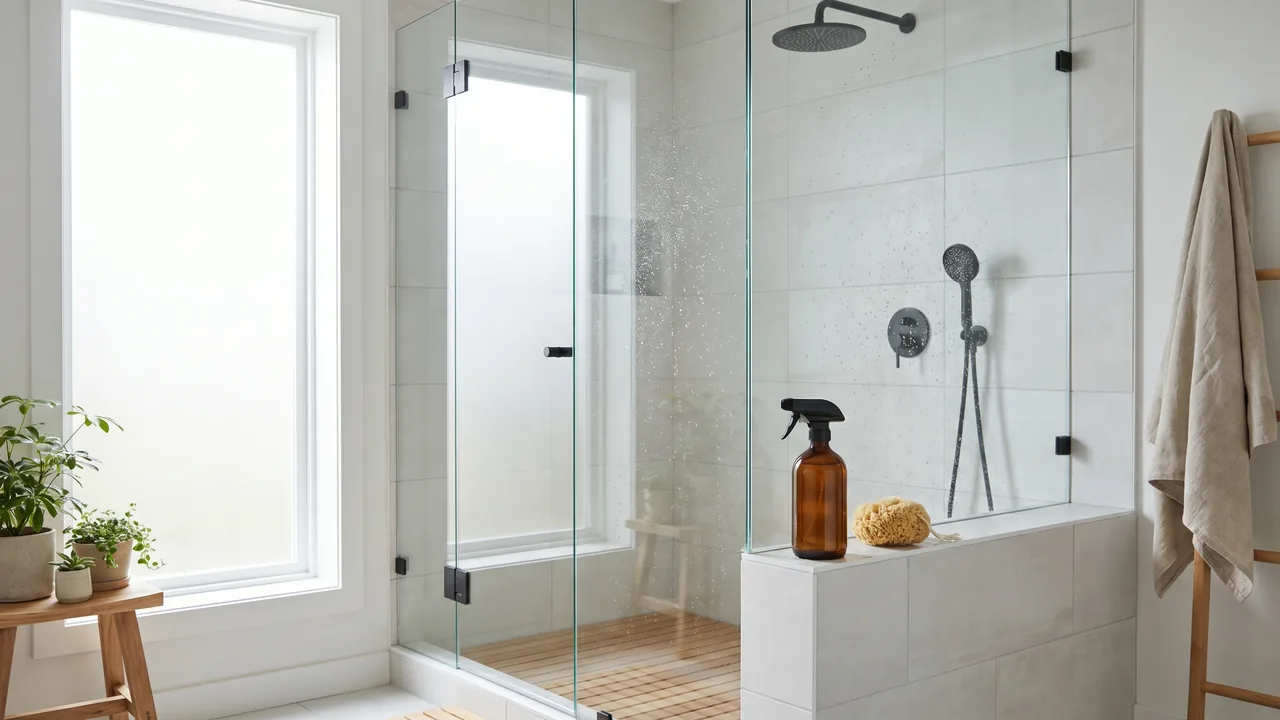
Glass walls and shower enclosures are where limescale is most visible. Here is how to clean a surface approved for the product by the manufacturer:
- Rinse the glass with warm water. Soften the deposit and rinse away loose dirt first.
- Apply the cleaner according to the label. Use the recommended dilution and avoid grout lines, stone, and metal finishes not approved for the product.
- Follow the specified contact time. Do not allow the cleaner to dry out.
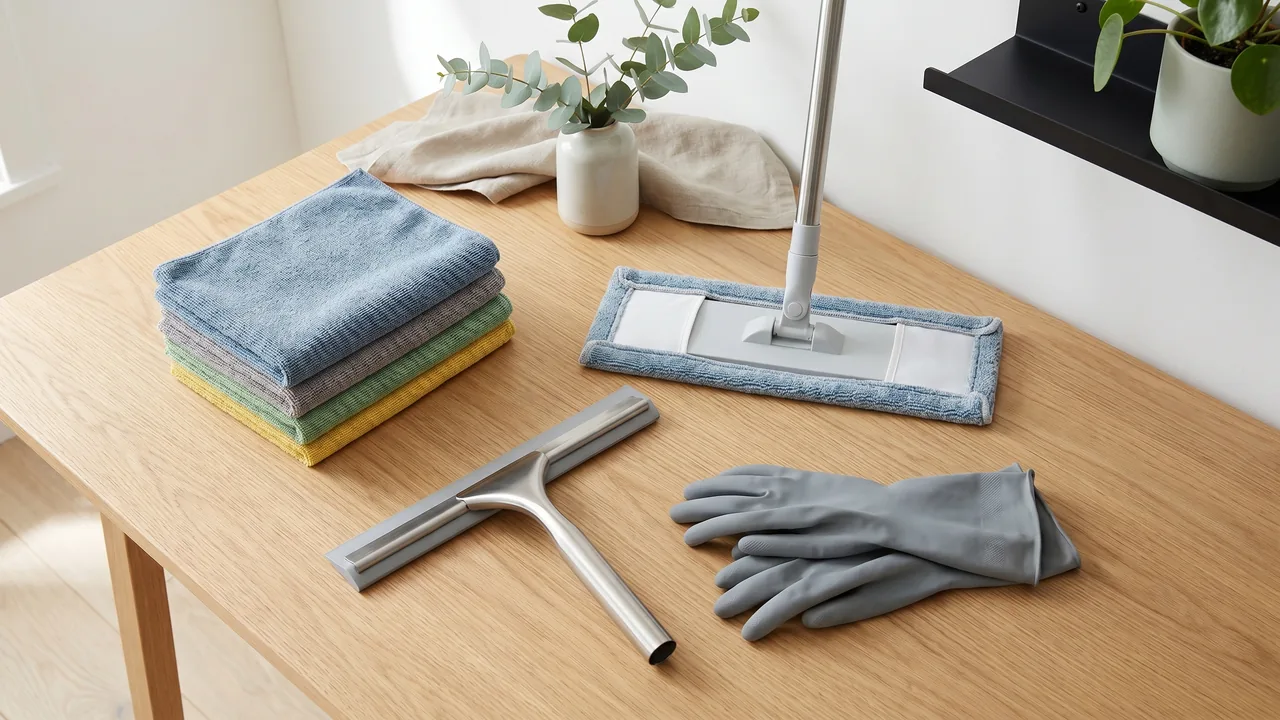
- Scrub gently with a soft sponge or microfibre cloth. Never use steel wool or scouring cream on glass — it scratches.
- Rinse thoroughly with clean water. Remove all residue, especially near grout lines and any nearby natural stone.
- Wipe down with a squeegee and a dry cloth. This prevents new limescale streaks from forming right away.
If the limescale is stubborn and thick, repeat the process instead of scrubbing harder. Time dissolves more than elbow grease.
How do you get limescale off taps?
Taps and mixer valves can have chrome, brushed steel, brass, lacquer, or other surface finishes. The difficulty is that limescale collects in crevices and around the aerator — the small mesh filter at the end of the spout — while using the wrong product can dull the finish.
Start with the manufacturer's recommended cleaner on a soft cloth. Do not leave wet cloths wrapped around the tap unless the manufacturer confirms the surface can tolerate it. A removable aerator can be cleaned separately following the tap supplier's advice. Rinse and dry all parts before reassembling them.
Avoid using acid on brushed brass, gilded, or specially treated taps — the same caution applies here as for natural stone. Check the manufacturer's advice if you are unsure.
How do you prevent limescale in the future?
The best limescale removal is the kind you do not have to do. Prevention takes only seconds:
- Run a squeegee over the shower glass after every shower. You remove the water before it has time to dry and leave limescale behind.
- Wipe down taps with a towel whenever you are nearby.
- Ventilate the bathroom well after showering, using an extractor fan or an open window. Dry air means water evaporates faster from surfaces you did not manage to dry.
- Do a quick weekly clean with a pH-neutral product to avoid needing heavy acid treatments later.
With these habits, limescale becomes something you keep away, not something you have to fight against.
When is it worth getting help?
If you are struggling with ingrained limescale all over the bathroom, or have a surface you cannot identify, it may be worth asking the tile or faucet supplier before proceeding further. If you are hiring someone, check that the company has a legal status in the Norwegian Labour Inspection Authority's Renholdsregisteret. Read more about legal cleaning services and Renholdsregisteret.
If you are moving out, the bathroom is in any case among the things that must be spotlessly clean. The same rules apply there as here – just with a bit more time set aside. See what is required in the checklist for move-out cleaning. If you instead want to tackle limescale in the rest of the house, or have a plan for how often you should clean, you will find recommendations in our guide on how often you should clean your home.
Sources and methodology
The advice was checked on 12 September 2026 against Byggkeramikkforeningen, Natural Stone Institute's care guidance for natural stone, Mapei's advice on vinegar on tile and grout, Giftinformasjonen, and municipal information on water hardness. We have not laboratory-tested homemade mixtures. Therefore, the article does not specify any universal strength or contact time: the product label and material manufacturer take precedence over general advice.