Eco-friendly cleaning at home: what actually works?
Eco-friendly cleaning is mostly about two things: using less product, and using the right product on the right surface. Baking soda, vinegar, and microfiber handle a surprising amount of everyday cleaning – but they do not replace everything, and some of what you have heard is pure myth. The most important thing to remember is one safety rule: never mix chlorine bleach with anything other than water.
What do baking soda, vinegar, and lemon actually solve?
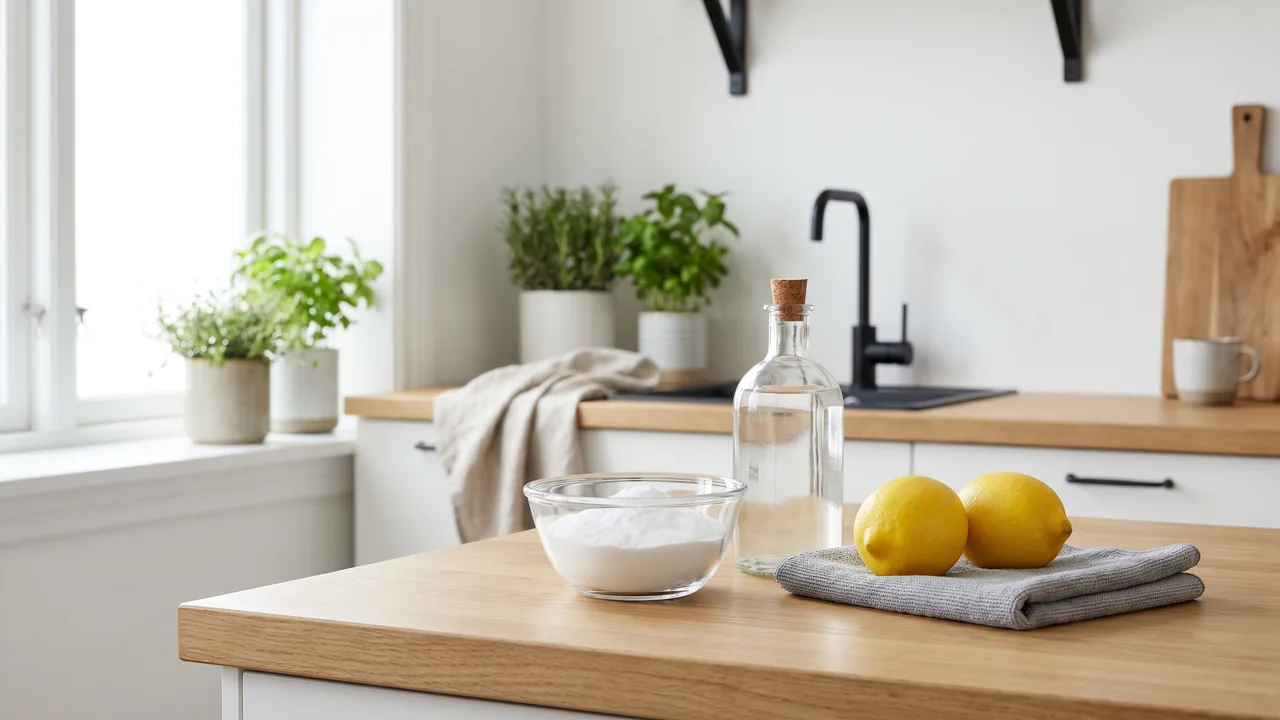
These three are not magic, but they cover a lot of standard household grime. The difference is chemical: baking soda is a mild base, while vinegar and citric acid are acids. This means they do different jobs.
Baking soda (sodium bicarbonate) is a mild abrasive and odor absorber. It scrapes away baked-on grease and coffee stains without scratching, and it traps odors in refrigerators and shoes. It does not bleach, and it is not a disinfectant.
Vinegar (acetic acid) dissolves limescale and soap scum. Diluted vinegar does a good job on a tap or shower wall with white limescale deposits. It kills some bacteria, but it is not an approved disinfectant and does not remove grease very well.
Citric acid effectively does the same thing as vinegar – dissolves limescale – but smells fresher and is easier to dose as a powder. It works well in kettles and dishwashers.
| Task | Works | Does not work |
|---|---|---|
| Limescale on tap/shower | Vinegar, citric acid | Baking soda |
| Baked-on grease in oven | Baking soda (as a scouring paste) | Vinegar alone |
| Odors in fridge/shoes | Baking soda | Vinegar (covers up, does not remove) |
| Descaling a kettle | Citric acid, vinegar | Baking soda |
| Surface disinfection | Neither is fully sufficient | All three |
If you want a thorough guide to limescale removal in the bathroom, we have written a dedicated piece on how to remove limescale in the bathroom and shower.
Is it worth mixing vinegar and baking soda?
No – and this is the most common misconception. When you pour vinegar onto baking soda it fizzes vigorously, which looks effective. However, the fizzing is just carbon dioxide escaping. The acid and the base neutralize each other, leaving you with salt water and some residue powder that neither dissolves limescale nor scours well.
Use them separately. Use baking soda as a dry scouring paste mixed with a little water, and vinegar as a limescale remover in a spray bottle. That way you get the full effect of both.
This does not mean the fizzing is entirely useless. The mechanical motion can loosen grime in a clogged drain. But you can clear it just as well with boiling water, and even better with a drain plunger.
Is acid safe on all surfaces?
You need to be careful here. Vinegar and citric acid are acidic, and acid etches calcium-rich natural stone. Marble, granite, and slate will get dull, etched spots that will not go away – the damage is permanent. The same applies to untreated wood and certain enameled surfaces, which can become dull over time.
The rule is simple: never use vinegar or citric acid on natural stone or marble. On a marble countertop or slate tile, use a neutral (pH-neutral) cleaning agent instead. Regardless of the surface – test in a hidden spot first, for example under an edge or behind a door.
Vinegar is safe and effective on glass, tiles, stainless steel, and porcelain. If you want streak-free windows, our window guide will help you further.
Safety: what you must never mix
This is the one section you cannot skip. Certain combinations create toxic gases from completely ordinary products:
- Chlorine bleach + vinegar → chlorine gas. Even small amounts irritate the airways; larger amounts can be dangerous.
- Chlorine bleach + ammonia → chloramine. Causes coughing, shortness of breath, and nausea.
- Chlorine bleach + other cleaning agents → unpredictable. Many agents contain acid or ammonia without it being clearly labeled.
The rule is short and absolute: never mix chlorine bleach with anything other than water. Ventilate well when using chlorine bleach, and rinse the surface before switching to another product if needed. Store chlorine bleach and acidic products separately, well out of reach of children.
What does the Nordic Swan Ecolabel mean – and how do I choose the right product?
The Nordic Swan Ecolabel is the official Nordic ecolabel. When a cleaning product bears the Swan, it has had to meet specific, verified requirements: low dosage amount per square meter, a high proportion of ecolabeled and biodegradable ingredients, and a ban on substances such as PFAS and microplastics. An independent third party verifies this, not the manufacturer itself. That is why the label says more than words like “green” or “natural” on the label, which no one verifies.
The EU Ecolabel (the EU Flower) is the corresponding European label and works the same way. Both are safe choices to look for in the store.
How to choose:
- Look for an official ecolabel (the Nordic Swan or the EU Ecolabel), not vague marketing terms.
- Choose concentrates where possible – less packaging and transport per wash.
- Dose according to the instructions. More product does not mean a cleaner surface, just more chemicals in the drain.
- Fewer bottles are better. One all-purpose cleaner, one for limescale, and baking soda cover most needs at home.
How much can microfiber replace?
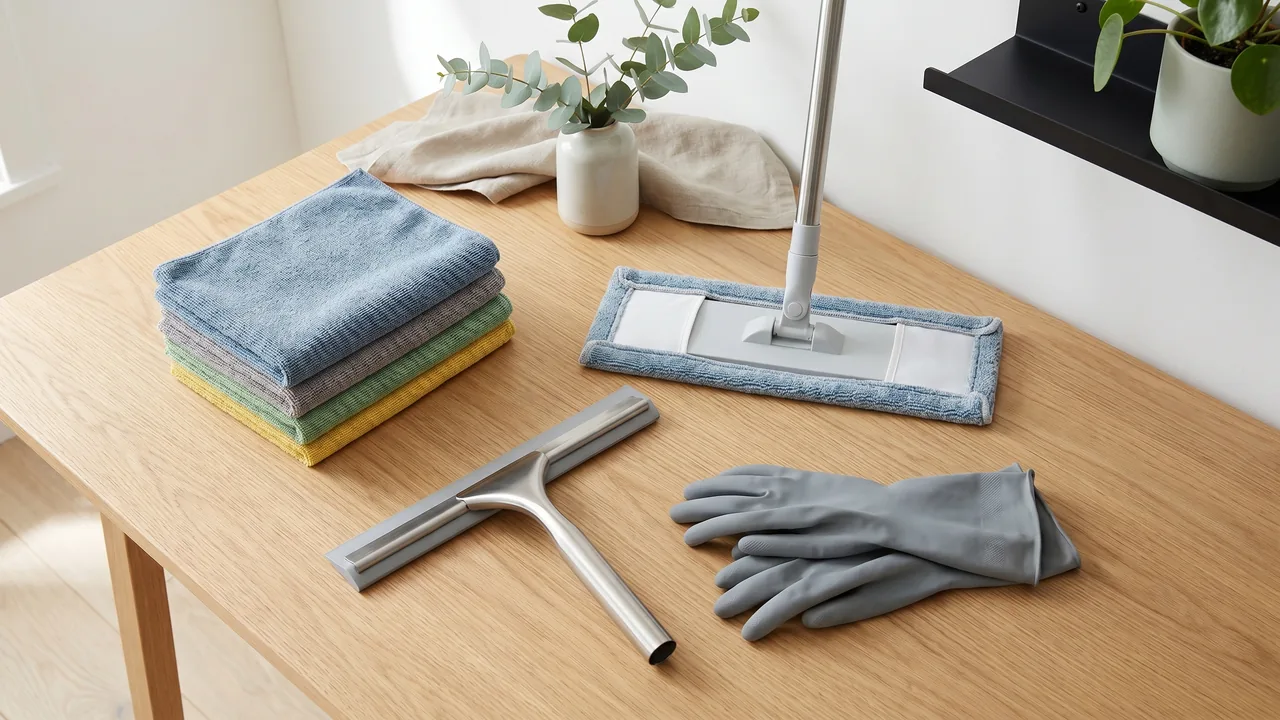
More than most people think. A good microfiber cloth traps dirt, dust, and grease mechanically – the fibers are so fine that they lift particles using water alone. On mirrors, tiles, countertops, and most smooth surfaces, you do not need cleaning agents at all; a damp cloth followed by a dry cloth to wipe down is enough.
It is the easiest environmental win you can achieve: less product, less packaging, less down the drain. The limitation is grease and baked-on dirt, where you still need a little soap or baking soda.
Care for the cloth correctly so it retains its performance:
- Wash at 40–60 °C, preferably together with other cloths.
- Do not use fabric softener – it settles in the fibers and ruins absorbency.
- Rinse thoroughly during use so you do not just spread the dirt around.
- Switch to a clean cloth between rooms, especially between the bathroom and kitchen.
What is folklore – and what is actually true?
To be honest about the limitations, here are the most common myths:
- "Vinegar disinfects." Partially. It kills some bacteria, but it is not an approved disinfectant. If you need to disinfect, use a product designed for that.
- "Baking soda + vinegar is a powerful cleanser." No, they neutralize each other. Use them separately.
- "Natural means safe for everything." No. Citric acid is natural and will still damage marble.
- "More detergent = cleaner." No. Overdosing leaves behind a film that attracts more dirt.
- "Essential oils clean." They smell good, but do little of the actual cleaning job.
The honest picture: baking soda, vinegar, citric acid, and microfiber cover perhaps 80 percent of daily cleaning with few chemicals. The final 20 percent – strong disinfection, tough grease stains, mold – sometimes require a specialized product. In those cases, choose one with an eco-label and use it purposefully.
If you want to make your entire home more eco-friendly, this is closely linked to how often you actually need to clean and which cleaning equipment you invest in. The most eco-friendly option is often the simplest: good cloths, correct dosage, and a bit of knowledge about what actually works.