How to get your oven sparkling clean without harsh oven cleaner
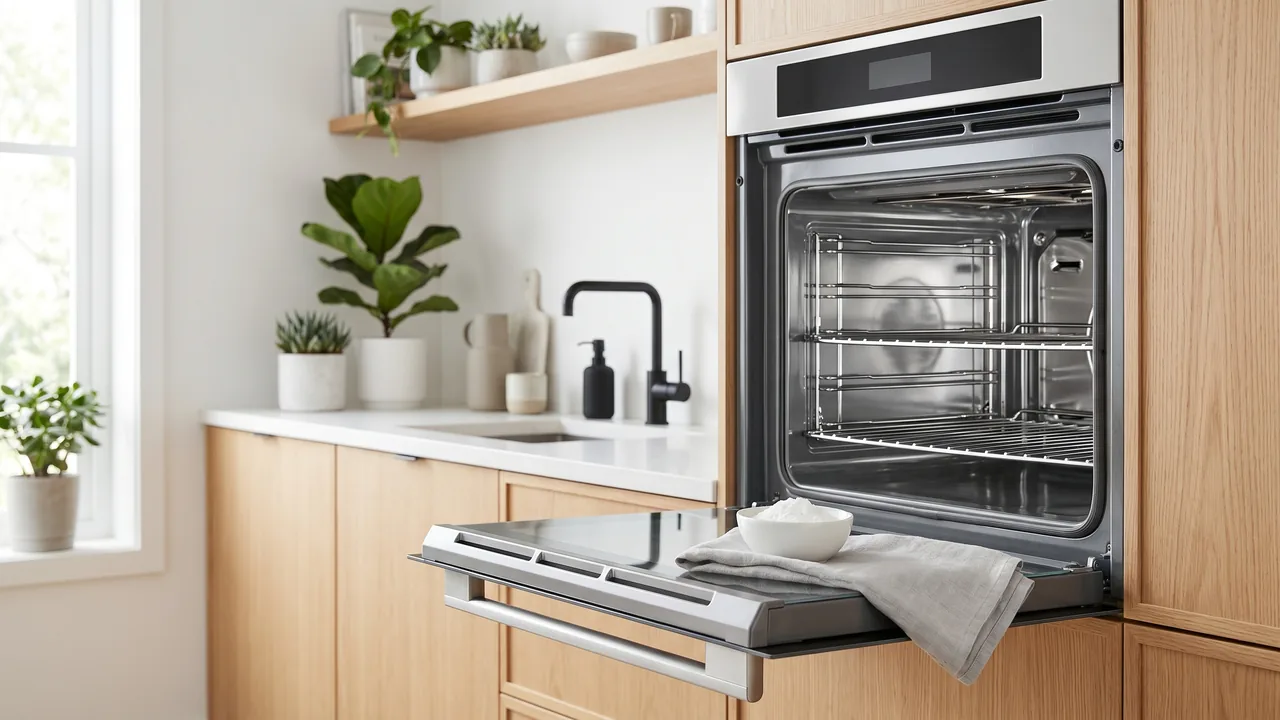
You don't need strong oven cleaner to get your oven clean. A paste of baking soda and water, spread over the grease and left overnight, dissolves most burnt-on food. For the glass door, use the same paste, and if you're unsure whether you need to scrub at all, it depends on whether the oven is pyrolytic, catalytic, or conventional. That determines the whole job.
Do I really need to scrub the oven?
It depends on what type of oven you have. That is the most important difference before you even reach for the cloth.
- Pyrolytic oven. This has a dedicated self-cleaning program that heats the oven cavity to around 500 degrees. All grease and spills are charred into a gray ash that you simply wipe out with a damp cloth afterwards. You don't scrub the interior – you press a button and wait a couple of hours.
- Catalytic oven. The side panels (and sometimes the back panel) are coated with a porous material that breaks down grease splashes while you bake, as long as the oven is hot enough (above approximately 200 degrees). You never wash these panels with water or soap – it ruins the coating. The bottom, door, and glass, however, must be cleaned by hand.
- Conventional oven (enameled). There is no automatic cleaning here. The entire cavity, bottom, sides, and door must be washed manually. The good news is that smooth enamel releases grease easily once you soak it first.
If you don't know what kind of oven you have, check the manual or the model number on a label inside the door. If you see a "Pyrolysis" or "Pyro" button, that settles it.
How do I clean the oven with baking soda and water?
Baking soda is the simplest and safest agent for a conventional or catalytic oven. Here is how to do it:
- Remove the racks and any baking sheets. Wipe out loose crumbs.
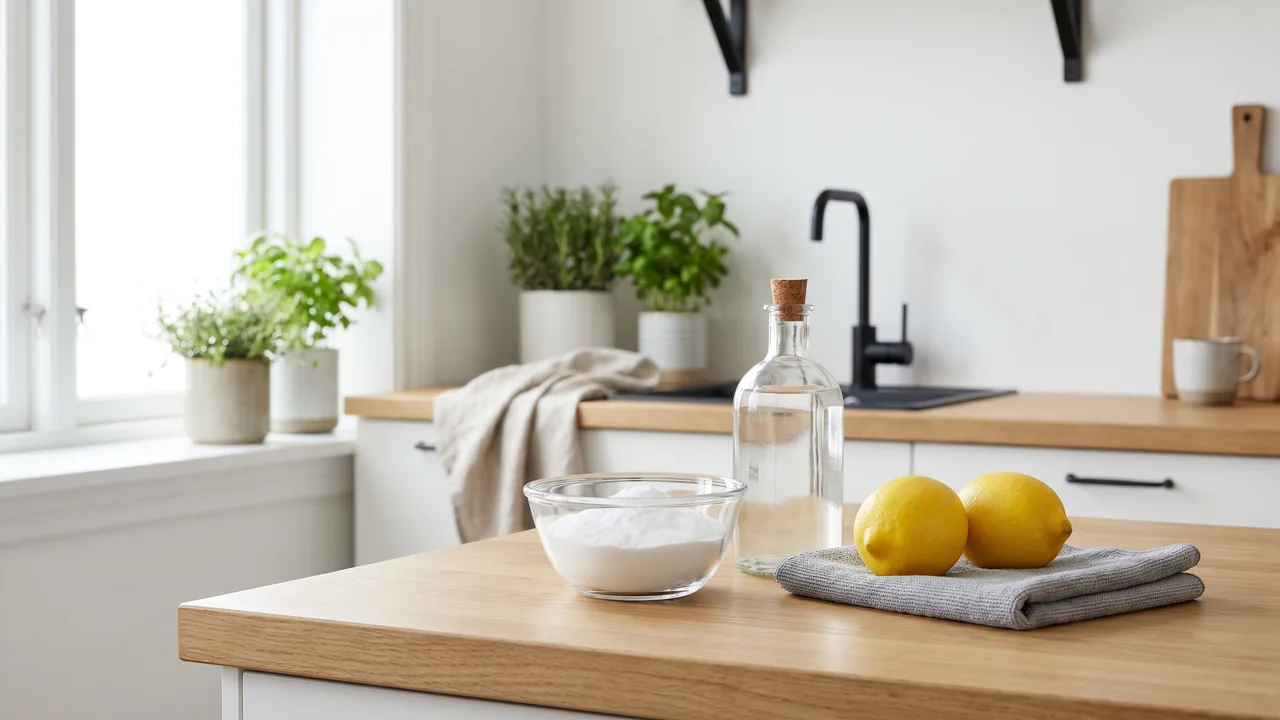
- Mix approximately 4 tablespoons of baking soda with a little water into a smooth, spreadable paste.
- Spread the paste over the inside – bottom, sides, top, and the inside of the door. Skip the heating elements and the porous panels of a catalytic oven.
- Let it stand overnight, preferably 8–12 hours. The baking soda gets time to dissolve the burnt-on grease.
- Wipe out the paste with a damp cloth. On stubborn spots, you can spray a little vinegar (only on enamel and glass) – it fizzes and loosens the residues. Wipe with clean water afterwards.
- Put the racks back when everything is dry.
If you do this regularly, you avoid heavy scrubbing altogether. On extra stubborn spots, it helps to heat the oven to 50 degrees for ten minutes before applying the paste.
Safety: Never mix bleach with anything other than water. Bleach and vinegar produce toxic chlorine gas, and bleach and ammonia produce chloramine. For the oven, you need neither bleach nor strong oven cleaner – baking soda and water are enough. If you still use a store-bought oven cleaner, ventilate well and use gloves.
How do I clean the racks?
The racks often get the dirtiest, but they are easy to handle. You have three options:
| Method | How to do it | Best for |
|---|---|---|
| Dishwasher | Place the racks inside on a full cycle | Light to moderate grease, if they fit |
| Soaking in the bathtub | Lay the racks in warm water with dish soap or a little baking soda, let stand for a couple of hours | Heavy burnt-on grease |
| Baking soda paste + steel wool | Spread the paste, let it work, scrub with steel wool or a coarse sponge | The worst, severely burnt-on racks |
Soaking does the work for you. After a couple of hours in warm water, much of the grease comes off with a sponge, and you don't have to scrub hard.
How do I get the glass door clean – including between the panes?
On the outside, baking soda paste or a little dish soap and a cloth are enough. Streaks and discoloration between the panes are trickier, as grease and condensation gather there over time.
Most modern ovens are built so you can access the space between the glass panes. Usually there is either a hinged panel at the bottom of the door or a couple of screws holding a trim piece. Check the manual for your specific model before unscrewing anything. Once inside:
- Apply baking soda paste to the discolored glass and let it sit for 15–20 minutes.
- Wipe off with a damp cloth, and polish dry with microfiber to avoid streaks.
- Reinstall the glass and trim piece exactly as they were. Make sure the glass faces the right way.
If you can't open the door without tools you aren't confident using, it's better to leave it alone than to force anything loose. If you want the whole kitchen sparkling clean in the same way, you can read our spring cleaning guide.
How often should I clean the oven?
The simplest rule: wipe up spills right away, while the oven is still warm and the grease is soft. Then you prevent it from burning fast the next time you cook.
| Usage | Deep clean |
|---|---|
| Normal daily use | Every two to three months |
| Frequent baking/roasting, fatty food | Monthly |
| Pyrolytic oven | Run pyrolysis a few times a year, wipe out the ash |
A small tip that saves a lot of work: place a baking sheet or baking paper on the rack below when you cook something that might overflow. That catches the mess before it hits the oven floor.
What about natural stone and other sensitive surfaces around the oven?
Vinegar and citric acid work well against limescale and grease residues on glass and enamel, but they are acids. Never use them on natural stone, marble, granite, or slate – the acid etches the surface and leaves dull spots that cannot be removed. If you have a natural stone countertop next to the oven, wipe up vinegar or citric acid spills immediately, and always test a cleaning agent in a hidden spot first. On a stone countertop, use mild soapy water instead.
Need help with more than just the oven?
A clean oven is often the start of a more thorough kitchen cleaning. If you are moving and want everything sparkling clean for the handover, the move-out cleaning checklist helps you remember everything – and if you want to know what move-out cleaning costs, you can find the prices here.
A final piece of advice whether you do the job yourself or hire help: if you use a cleaning company, check that it has the status "Godkjent", "Søknad under behandling", or "HMS-kortbestilling under behandling" in the Norwegian Labour Inspection Authority's Renholdsregisteret. Since July 1, 2018, it has been illegal, including for private individuals, to purchase cleaning services from a business that lacks legal status, and doing so is punishable. If you clean the oven yourself, you'll manage fine with a container of baking soda, a little patience, and an evening for the paste to work overnight.