Cabin cleaning: complete checklist for opening and closing
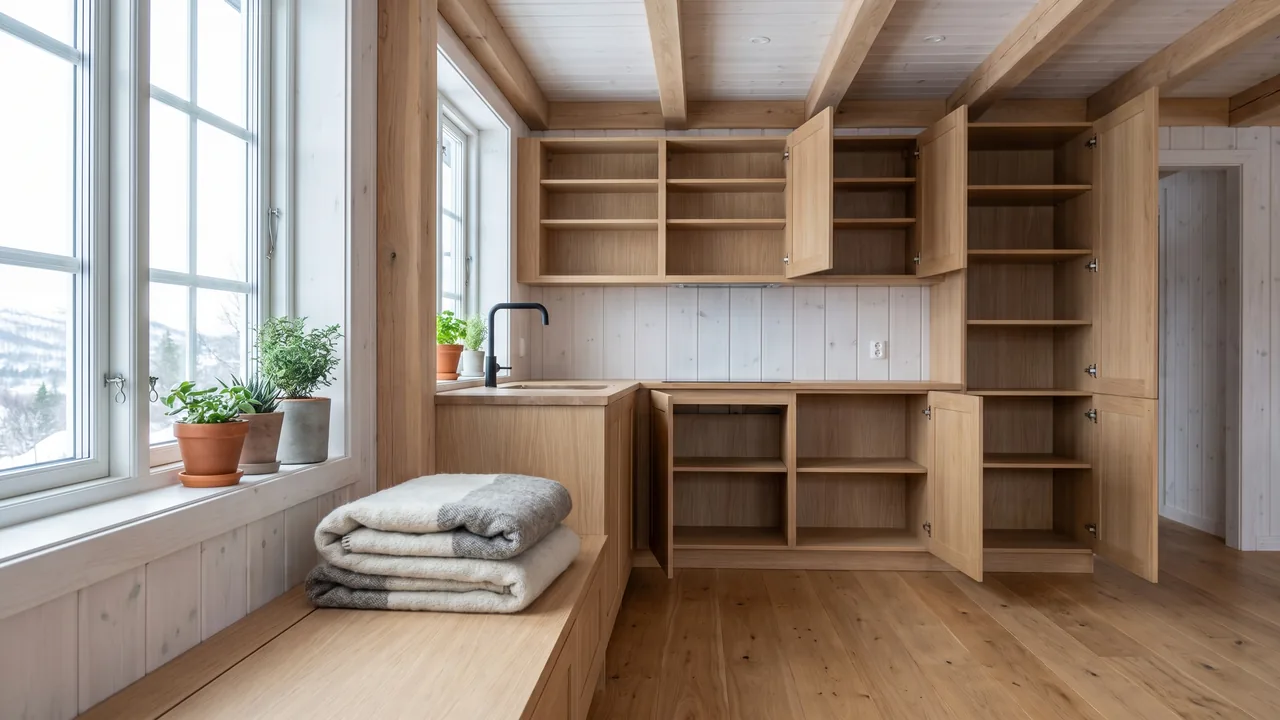
Cabin cleaning is two jobs, not one: spring preparation when you open, and shutting down when you leave the cabin for the winter. The most expensive mistake is skipping frost protection in the autumn – a burst water heater or frozen pipe run can cost tens of thousands. Below you will find two numbered checklists, one for each end of the season.
The rhythm of the Norwegian cabin goes in a circle. You open at Easter or in May, use the cabin throughout the summer, and shut down again before the cold sets in for real. The two lists are connected: everything you do correctly during shutdown saves you work and damage when opening.
How do I prepare the cabin in spring?
After a winter with turned-off water and closed doors, dust, possibly mice, and a stale smell have gathered. Go through the rooms in this order, so you avoid washing the same surface twice.
- Aerate first. Open all windows and doors for half an hour before you begin. Fresh air removes most of the stale smell.
- Check for mice. Look for droppings, chewed textiles, and nests in cupboards and under beds. If you find traces, discard affected food and textiles, and wash the surfaces with soapy water.
- Dust from the top down. Start with ceiling mouldings, shelves, and lamps, so the dust lands on the floor that you wash at the end.
- Turn on the water carefully. Open the main tap slowly and do a round to check for leaks at connections and traps before leaving the room. Flush all taps until the water is clear.
- Flush toilets and traps. Flush several times to rinse out the antifreeze you added last autumn.
- Clean the fridge and freezer. Wipe out the old absorbent, wash with baking soda and water, and leave the doors open until they are completely dry before turning on the power.
- Air out textiles. Hang duvets, pillows, and blankets outside on a sunny day. Sunlight and air remove moisture and smell better than anything else.
- Wash floors last. Mop or wash all floors, and wipe down thresholds and doorframes where dust settles.
- Set out the outdoor furniture. Wipe down, check for rot and rust, and oil wood that has dried out over the winter.
Once you have gone through this, the cabin is ready for use. If you need to go deeper – for instance after a busy season – you can follow the guide to deep cleaning for the most worn rooms.
How do I shut down the cabin for the winter?
Shutting down is mostly about two things: removing everything that can freeze, and preventing moisture and animals from causing damage while the cabin stands empty. This is the list you definitely should not rush through.
- Close the main tap and disconnect the water supply.
- Drain all pipes and the water heater. Open taps at the lowest point so the water drains out. A forgotten litre of water in a pipe can burst it.
- Pour antifreeze into all water traps – kitchen, bathroom, drains, and toilet. Empty the toilet bowl and add antifreeze there too.
- Empty the fridge and freezer completely. Clean them, and leave the doors ajar. Closed, damp appliances become mouldy appliances.
- Remove all food. Also seeds, crispbread, pet food, and spices. Whatever you do not take with you, the mice will find.
- Seal potential entry holes with steel wool or sealant. Mice can get through openings smaller than a centimetre.
- Set out moisture and odour absorbents in the most exposed rooms, and preferably a couple of mousetraps.
- Prop mattresses up from their bases and leave cupboard doors ajar, so air circulates and moisture does not accumulate.
- Pack textiles in closed plastic boxes. Bed linen, towels, and clothes in cardboard or open baskets are tempting nesting material.
- Take trash and valuables with you, unplug appliances, and turn off the main power if you do not have a frost guard or alarm that requires electricity.
- Bring outdoor furniture inside or cover it up. Draw curtains slightly open so sunlight does not bleach textiles unevenly.
The simplest rule of thumb: if it contains water, it must be drained or frost-protected.
What do I do about mould and moisture?
Mould needs two things – moisture and stagnant air – and a closed cabin provides both. Prevention in the autumn is far easier than remediation in the spring. If you still get mould spots on walls or in joints, wash with water and a little mild detergent, and dry thoroughly afterwards. Stubborn spots on tiles and joints can be treated with a bleach product.
Here is a safety rule worth memorising:
Safety with cleaning products: Never mix bleach with anything other than water. Bleach and vinegar produce toxic chlorine gas. Bleach and ammonia produce chloramine. Both are dangerous to inhale. Use gloves, ventilate well, and keep products separate.
If the cabin is in a humid climate near the sea, moisture and salt absorbents are cheap insurance. Check them on every visit and replace them when the container is full.
What about limescale, natural stone, and surfaces?
Many cabins have limescale deposits on bathroom surfaces and around taps after a season. Vinegar and citric acid effectively dissolve limescale, but you must be careful with the underlying surface.
Acid – vinegar, citric acid, and most limescale removers – etches natural stone, marble, granite, and slate, leaving dull spots that will not go away. It can also damage untreated wood and certain enamelled surfaces. If you have a stone countertop or slate tiles, use a pH-neutral product made for stone instead. Always test in a hidden spot first. You can find more in our guide on removing limescale in the bathroom and shower.
What should I bring to the cabin?
Keep a dedicated cabin kit so you do not have to search every time. The table shows what covers both jobs.
| For spring preparation | For winter shutdown |
|---|---|
| All-purpose cleaner and baking soda | Antifreeze for water traps |
| Microfibre cloths and mop | Steel wool and sealant for holes |
| Bucket and rubber gloves | Moisture/odour absorbent |
| Rubbish bags | Mousetraps |
| pH-neutral stone cleaner (if needed) | Airtight plastic boxes for textiles |
| Oil for wooden outdoor furniture | Rubbish bags for emptying out |
A good selection of tools makes the job faster. We have gathered our recommendations in best cleaning equipment 2026.
How much does it cost to get help with cabin cleaning?
The prices here are market estimates for 2026, not a quote from Vaskeladden. The cost depends on size, condition, and access. If you buy the service, ask the provider for a written quote that states the price and scope.
If you want to outsource the job, the market price for cabin cleaning as of 2026 is typically around 600–900 NOK per hour, often with a fixed minimum charge for call-outs since cabins are often in remote locations. Many companies offer a fixed seasonal package for opening or shutting down.
An important reservation: For employees over 18 in private cleaning companies, the universally applied minimum wage is 236.54 NOK per hour from 15 June 2025. An unusually low offer is a reason to check the scope, registration, and working conditions, but the price alone does not show what someone is paid or whether the work is legal.
Also check that the company has legal status in the Norwegian Labour Inspection Authority's Renholdsregisteret. Since 1 July 2018, it has been illegal, including for private individuals, to buy cleaning services from a business that lacks legal status in the register. It is punishable by law. Look up the company before ordering – read more in the guide on legal cleaning help and Renholdsregisteret. If you are choosing a provider, the checklist in how to choose a cleaning provider will help.
Summary
Cabin cleaning is an annual routine in two acts. In the autumn, you frost-protect, drain water, remove food, and seal out moisture and mice. In the spring, you air out, turn the water back on, and wash away the winter's dust. Keep the two lists in your cabin kit, and you will avoid both frost damage and unpleasant surprises at Easter.